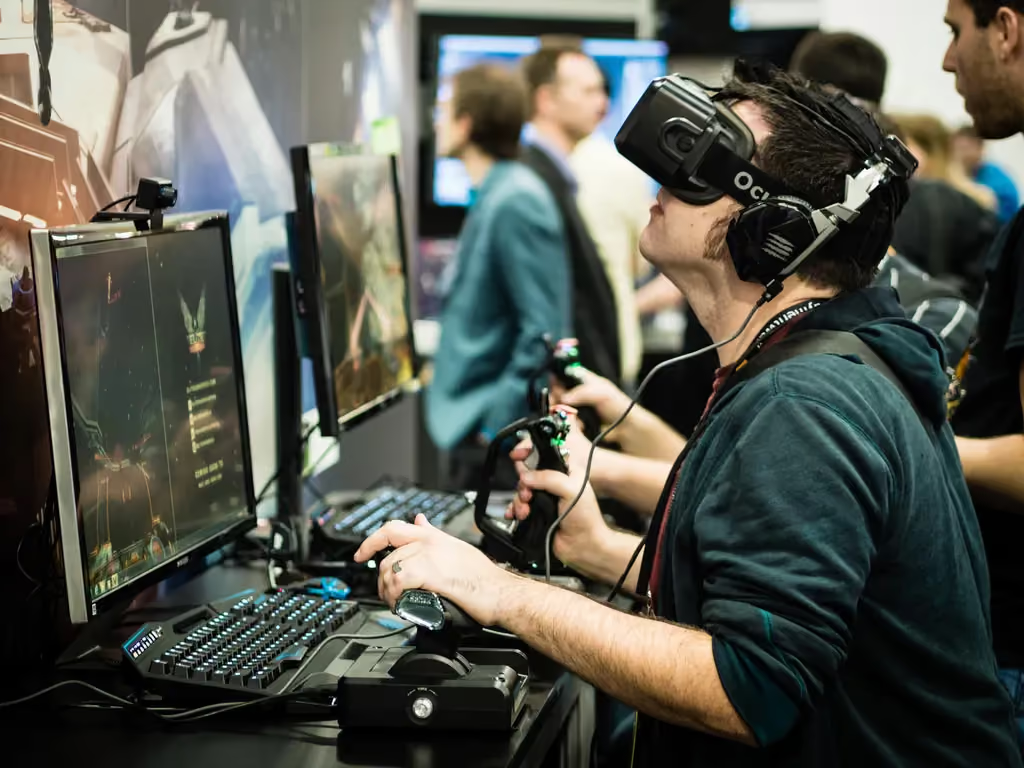
The split of reality
As users of digital media (through phones, laptops, smartwatches) we interact with a palpable reality, much like the keyboard I’m typing on. The interface allows a certain amount of control. I am a user because I choose to interact with this interface knowing my senses are operating to interpret it, and the rules of reality match those of the world around me.
Once you put on a VR headset, that reality splits. Your senses are hijacked across two reference frames, one of them virtual. The virtual one is a reality designed by the game designer, and as a designer, they can choose to elicit specific interactions from whoever steps inside.
A house with someone else’s rules
Imagine the virtual space as a colleague’s residence. It’s their house and you adhere to their rules; the reality of the house bounds what you are allowed to do inside it. You can’t dance in your underwear there (unless permitted to or required to by your weird colleagues, in which case, where do you work to have such awesome colleagues?). By accepting the rules, you are letting the rules of their reality apply to you. Similarly, when you step into virtual reality you are allowing some of your senses to interpret, and follow, the rules of reality set by the game designer.
If I were to assume the role of a VR game designer, I’d be embarking on a journey where I decide how your senses interpret visual and auditory cues. I’m dictating how you must perceive the reality I’ve created, which you have chosen to interpret as part of the partial reality you’re experiencing. As an experienced designer, I see immense potential in how I can influence behaviour. Look at how people react to even basic horror games in VR. Even watching reaction videos on YouTube (from outside the headset) you can sense how visceral the experience must have been for the visitor inside it. Thanks, Cpt. Obvious.
The reality-check primitive
Playing Resident Evil on a console or a computer, you view a reality while actively engaging your senses. You can move your head and look at a wall, a window, or a cat walking on the fence behind your screen. That gives you the knowledge (comfort, to some extent) that you chose to immerse yourself in this horror game. You can do a reality check and recover some control over what’s going on in your world.
In VR, when I turn around I’m still in a 3D space at the mercy of the creator’s design. I can’t do a basic reality check. I’m not using the game to give me an experience; the game is enforcing a reality where my ability to do a reality check is limited. (I can take off the headset, jump over the wires and cry like a baby in my bathtub, but I still won’t be as brave as this person.)
Visitor, not user
You could push back on the framing, but this is exactly why I want the distinction between user and visitor. The person in the reaction video is locked inside the game’s reality. Basic as the horror is, it’s powerful enough that she can’t reason her way back out: the game’s reality stops feeling escapable. That’s the line between visitor and user.
For experienced designers, this behooves caution. The way we treat the creation of experiences for digital users and VR visitors is not the same job. Knowing the distinction lets us see where the boundaries lie before we start designing across them.